A wave crashes out of a corner screen in Seoul. A giant hand reaches off a billboard in Tokyo. A jeep drives straight off the edge of a building in Delhi. None of these are video tricks — they're a 3D billboard, built from two flat LED panels meeting at an angle, with content rendered to trick one eye into seeing depth that isn't physically there. It's the single most-searched LED advertising format in the country right now, and most buyers still don't know how it's actually made.
What a 3D Billboard Actually Is
Strip away the marketing language and a 3d led billboard is two (sometimes three) flat LED display panels joined at a 90° corner, running content that's been rendered specifically for that angle. There's no glasses, no hologram, no physical depth. The illusion works because the content is designed as if the corner were a single continuous 3D scene, and the human eye — viewing from a fixed street-level angle — fills in the rest. Move too far off-axis and the illusion breaks; that's why placement and viewing angle matter more here than on any other LED format.
This is also why "3d billboard" and "3d led billboards" get used loosely online. Some listings mean true anamorphic corner screens. Others mean a flat panel simply playing a 3D-rendered video with no corner at all — which looks good on Instagram but delivers none of the depth effect in person. Know which one you're buying before you sign off on content.
How the Illusion Is Built: Anamorphic Content
The technical term is anamorphic billboard content — video distorted on purpose so that, once mapped across the corner angle, it reads as undistorted and three-dimensional from one specific vantage point. This isn't a template. Every corner install has a different angle, height, and typical viewing distance, so content has to be built or adapted per screen. A 3D billboard bought as a bare panel with generic content will look flat; the render is doing most of the work.
| Format | Best for | Illusion strength |
|---|---|---|
| 90° corner (2-panel) | Building corners, mall entrances | Strongest — the classic effect |
| L-shape wrap | Rooftop hoardings, junction sites | Strong, wider viewing window |
| Curved 3-panel | Circular plazas, stadium exteriors | Moderate, works from more angles |
| Flat panel, 3D-rendered video | Social content, standard signage | Weak — no real depth, video trick only |
3D Billboard vs Flat LED Display: When Each Wins
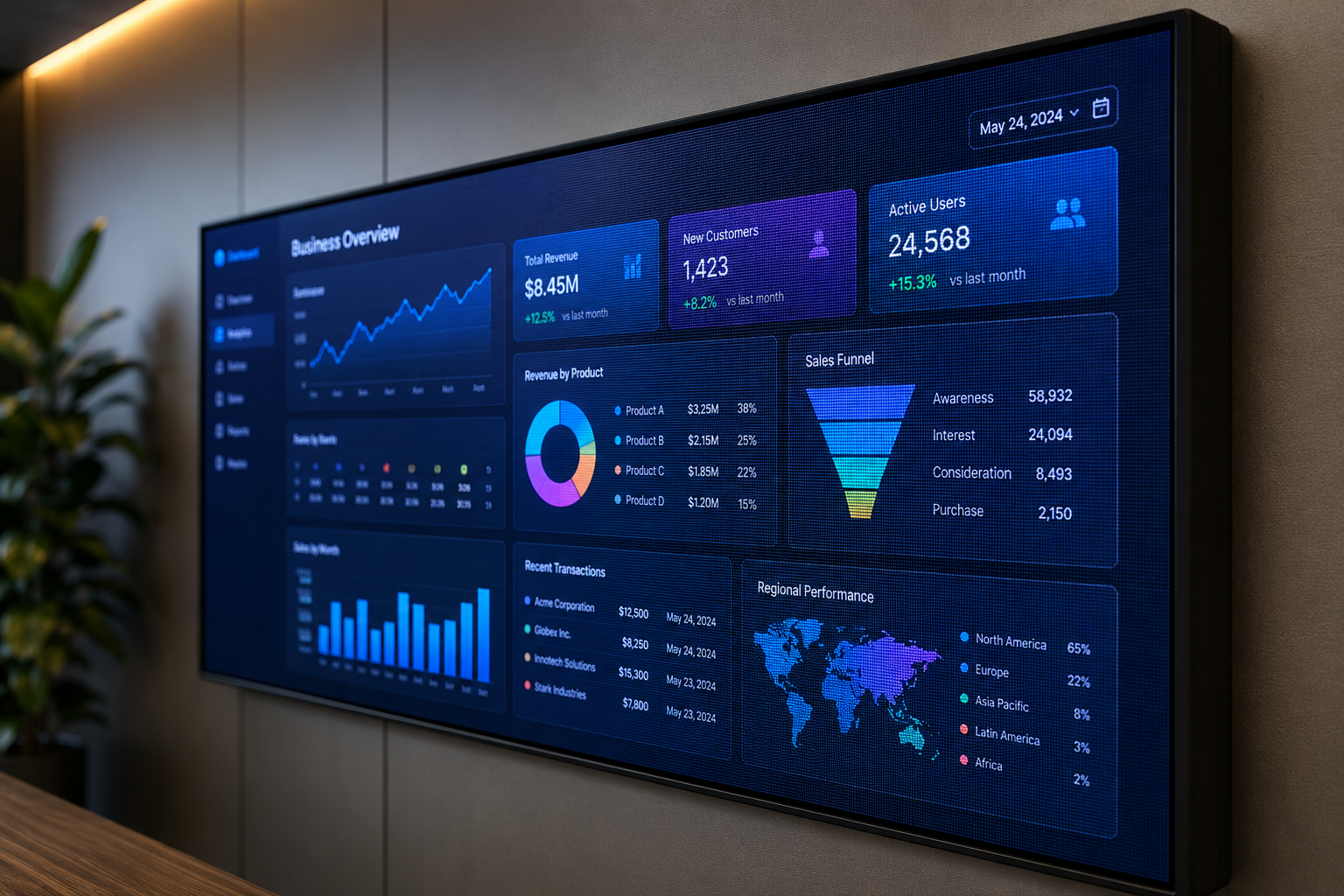
A flat led display is the right call for most jobs — retail counters, lobby video walls, straightforward digital signage. A 3D billboard earns its extra cost only where foot traffic is heavy and the goal is a stop-and-film moment: a flagship launch, a mall entrance, a high-footfall junction. It's built for reach through sharing, not for running quiet rotating ads all day. Judge it by that job, not by comparing its price-per-square-foot to a flat panel doing a different job entirely.
| Goal | Best fit | Why |
|---|---|---|
| Brand launch, viral moment | 3D corner billboard | Built for stop-and-record engagement |
| Daily rotating ads, retail | Flat led display | Content works from every angle, lower cost |
| Highway visibility | Flat led billboard, wide pitch | 3D illusion breaks at speed and distance |
| Mall entrance, junction corner | 3D anamorphic billboard | Fixed pedestrian viewing angle suits the effect |
What Decides 3D Billboard Price
A 3d billboard price quote sits on top of everything a normal outdoor LED display already costs — pixel pitch, IP rating, cabinet grade — plus three things unique to the 3D format.
- Structural steel for the corner mount — two panels meeting at a precise angle need a stronger frame than a single flat wall.
- Content production — anamorphic renders are custom work, priced separately from the hardware, and repeat with every new campaign.
- Calibration — the two panels have to be colour- and brightness-matched so the seam at the corner disappears, which adds commissioning time on-site.
Buyers researching 3d billboard cost or 3d led billboard price online usually find hardware-only numbers that leave out content and structural work — which is where the real budget gap shows up later.
Pixel Pitch for 3D Billboards
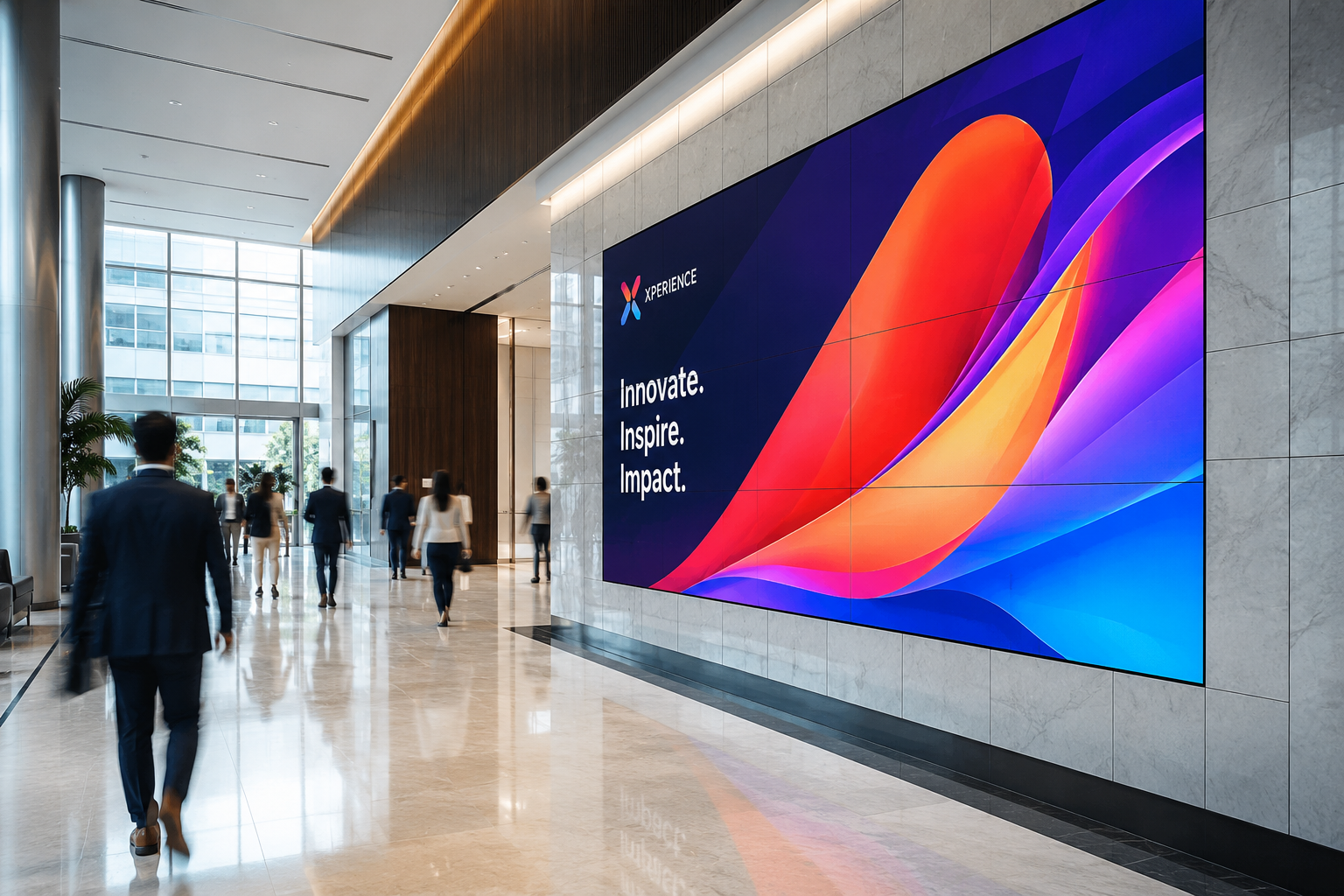
Most 3d led billboards sit in the P2.5–P6 range. Fine enough that the seam between panels doesn't show at typical street distance, wide enough that outdoor brightness and cost stay reasonable. Go finer than P2.5 outdoors and cost climbs fast for a resolution gain nobody at pavement level will register; go wider than P6 and the corner illusion starts looking blocky up close, which is the one place a 3D billboard can't afford to.
Where 3D Billboards Make Sense in India
Metro junctions and mall fronts in Delhi and Mumbai get most of the attention, but the same corner-format logic works anywhere with steady pedestrian footfall and a fixed viewing point — a market corner, a cinema entrance, a highway toll plaza with queued traffic. For outdoor advertising Jaipur and other Rajasthan cities, the format is newer, which cuts both ways: less competition for attention, but also fewer local vendors who've actually commissioned one before. Ask specifically about corner-mount and anamorphic content experience, not just general led display manufacturing.
Questions to Ask Before You Buy
- Is this a true corner/wrap install, or a flat panel playing 3D-style video?
- Who builds the anamorphic content — is it included, or a separate line item per campaign?
- What's the calibration process for matching brightness across the two panels?
- What's the ideal viewing distance and angle, and how does that match the actual site?
- Does the structural mount account for wind load on a corner-facing install?
How to Buy: Five Steps
Frequently Asked Questions
How does a 3D billboard work without glasses?
Two LED panels meet at a corner and play content rendered specifically for that angle. Viewed from the right spot, the brain reads it as one continuous 3D scene — no glasses or special hardware needed.
What is the cost of a 3D billboard in India?
Hardware typically starts around ₹40,000 per square foot install-ready, before anamorphic content production and structural corner-mounting, which are priced separately from the panel itself.
Is a 3D billboard the same as a curved LED display?
No. A curved led display bends smoothly for architectural wraps. A 3D billboard uses flat panels meeting at a sharp corner angle, purpose-built for the anamorphic illusion.
Do 3D billboards work in daylight?
Yes, if built to outdoor brightness and IP-rating standards like any other outdoor led display — the 3D effect itself doesn't need darkness, though night footage tends to travel further on social media.
A 3D billboard isn't a better version of a flat led display — it's a different tool for a different job: stopping foot traffic and getting filmed. Get the corner angle, pixel pitch, and anamorphic content right, and it earns that cost back in reach a flat screen in the same spot never would.
Thinking about a 3D billboard for your next campaign?
Tell us your site, footfall pattern, and campaign goal — we'll tell you honestly if a 3D format fits, or if a flat led display does the job for less.
Get a Quote →